


Key points
- Three forms: virtual influencers created with AI, human creators who use digital twins, and AI assistants that directly recommend what to choose.
- The rules: for AGCOM, virtual characters are influencers too; the AI Act requires transparency about synthetic content.
- The new risk: when the recommendation comes from a chatbot, advertising can become invisible.
For a decade, an influencer was a person with a phone and a community. Today, influence increasingly flows through a machine: a computer-generated face that never ages, a creator who hands routine videos over to a digital clone, or an AI assistant we ask “which vacuum cleaner would you recommend?” and that answers with a single name. AI influencers are already here, and they raise new legal and ethical questions.
Virtual influencers: for AGCOM, they are influencers in every respect
Italian rules leave no room for doubt. The AGCOM guidelines on influencers, updated by Resolution 197/25/CONS together with the new Code of Conduct, define as an influencer anyone who carries out the activity “including through virtual characters”. An AI-generated avatar promoting a product must therefore comply with the same obligations as a human creator, starting with advertising transparency.
A gray area remains: the AGCOM rules require advertising to be disclosed, but they contain no specific obligation to disclose that the character is artificial. This is where the AI Act comes in. From August 2, 2026, synthetic content must be marked by the providers of generative systems, and deepfakes, that is, content that resembles real people, places or events and may appear authentic, must be disclosed by whoever publishes them.
Digital twins: when the creator multiplies
More and more creators use clones of their own voice and face to produce videos in other languages or to reply to fans. This is legitimate, if done transparently. But it raises questions: who is liable if the clone says something improper? Does the audience have the right to know when it is the person speaking and when it is their copy? For brands, the prudent rule is simple: clear contracts on the use of the digital likeness, and explicit disclosure when content is generated.
The chatbot as invisible influencer
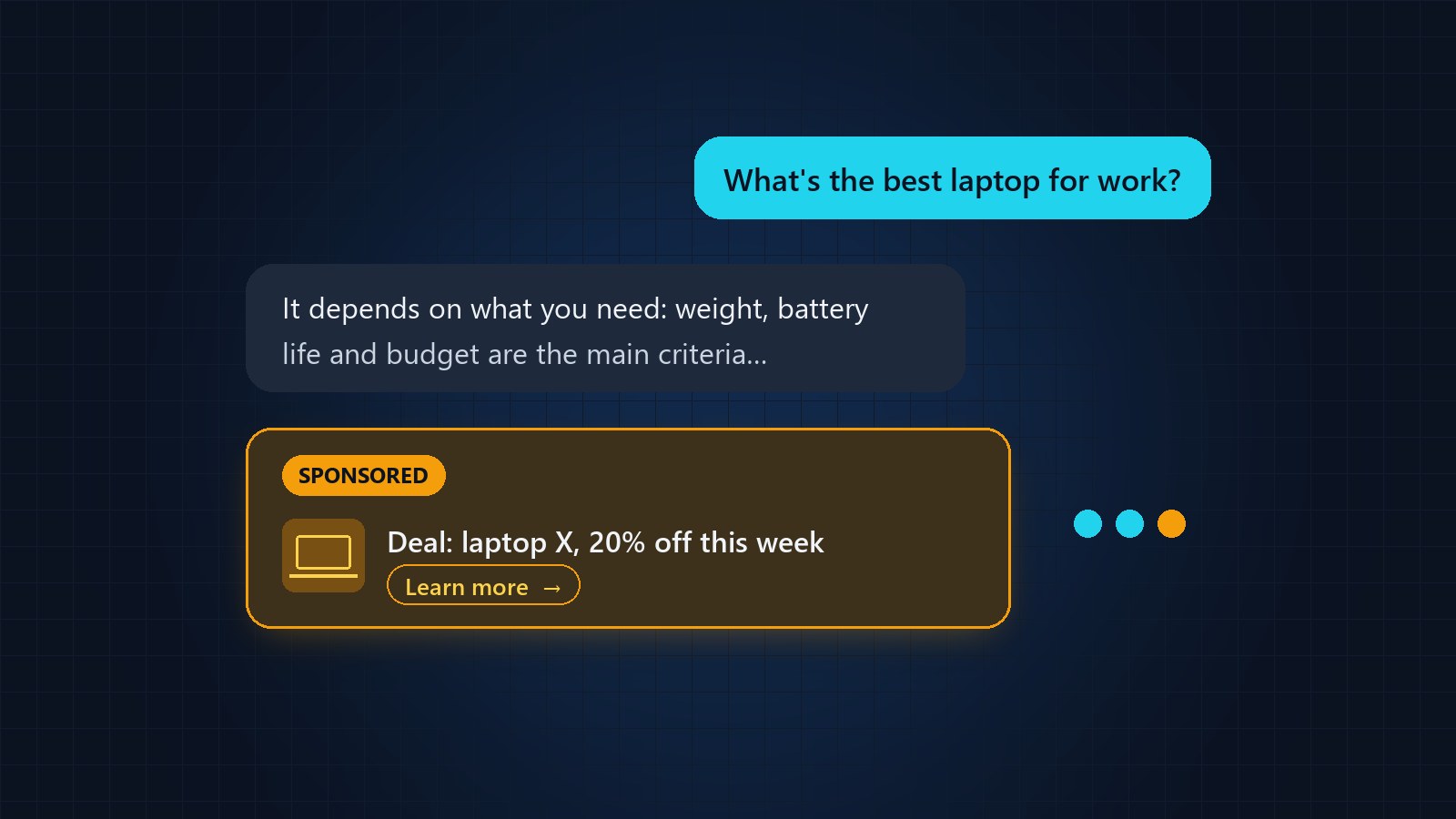
The most profound transformation is the third. When we look for a product on a search engine, we see ten results, reviews, labeled ads. When we ask an AI assistant, we often get a single answer, confident and well written. The decision path gets shorter, and with it the opportunities for comparison.
This gives rise to three ethical risks:
- Unrecognizable advertising. If an assistant inserts sponsored products into its answers, the user must know, with the same clarity we demand from a human influencer.
- Optimizing for machines. Brands are learning to “appeal” to models, not just to people. Content written to be cited by AI can distort information.
- Personalized persuasion. An assistant that knows its users’ tastes, habits and vulnerabilities has a power of persuasion that no influencer has ever had.
Influencer marketing is also one of the topics expected in the Digital Fairness Act, the European proposal on fairness in digital markets that the Commission plans to present by the end of 2026. It will be interesting to see whether it also tackles advertising within chatbot answers.
Three rules for brands
- Disclose twice: that it is advertising and that it is AI. One form of transparency does not replace the other.
- Do not simulate real people without clear, written consent to the use of their likeness and voice.
- Focus on genuine content: if AI assistants select the most reliable sources, quality once again becomes the best visibility strategy.
The compass
Influence is not disappearing: it is changing shape and moving toward machines. The ethical question remains the same as ever, but it becomes more urgent: who is advising me, and in whose interest?
This article is for informational purposes only and does not constitute legal advice. Information current as of November 2026.

Leave a Reply