

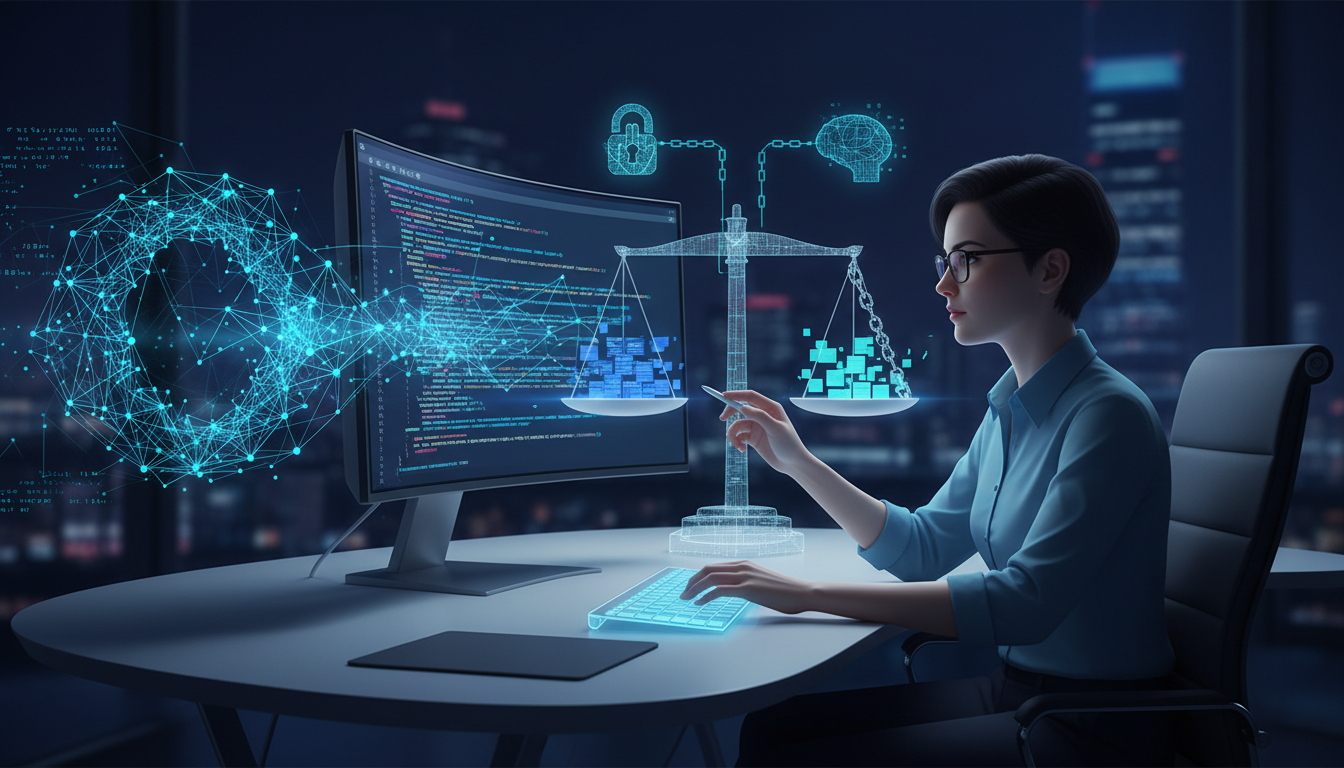
You wrote 20 lines of prompt. The AI produced 500 lines of code, the tests, the documentation and even the README. Then you commit. Author: you. But are we sure the concept of authorship is still that simple?
With generative AI, we are entering territory where copyright, intellectual property, authorship and responsibility are not necessarily the same thing. For those who develop software, this is no longer a theoretical discussion.
The code is yours. Or maybe not.
AI assistants can now generate functions, queries, tests, configurations and entire modules. The person defines the goal, provides the context, evaluates the result and decides whether to integrate it. The machine carries out part, sometimes a very large part, of the implementation.
So the point is not just who typed those lines? The more interesting question becomes who exercised creative and technical control over the result.
Is a prompt enough to make us authors?
Not all prompts carry the same weight. “Write a function that sorts this list” leaves the system enormous latitude. A specification that sets out architecture, constraints, algorithms, interfaces, edge cases and test criteria, on the other hand, embodies many more human decisions.
Authorship may shift from the physical writing of code to the quality and substance of the decisions that determine the result.
But this does not automatically settle the legal question. Copyright and intellectual property depend on the jurisdiction, on contracts, on the terms of the tool being used and on the human creative contribution. That is why it is risky to reduce everything to the formula “AI-generated code always belongs to whoever wrote the prompt”.
The most uncomfortable question: who is accountable?
If we are ready to claim excellent code produced with AI as our own, are we equally ready to take responsibility when that code contains a bug, a vulnerability or a licensing problem?
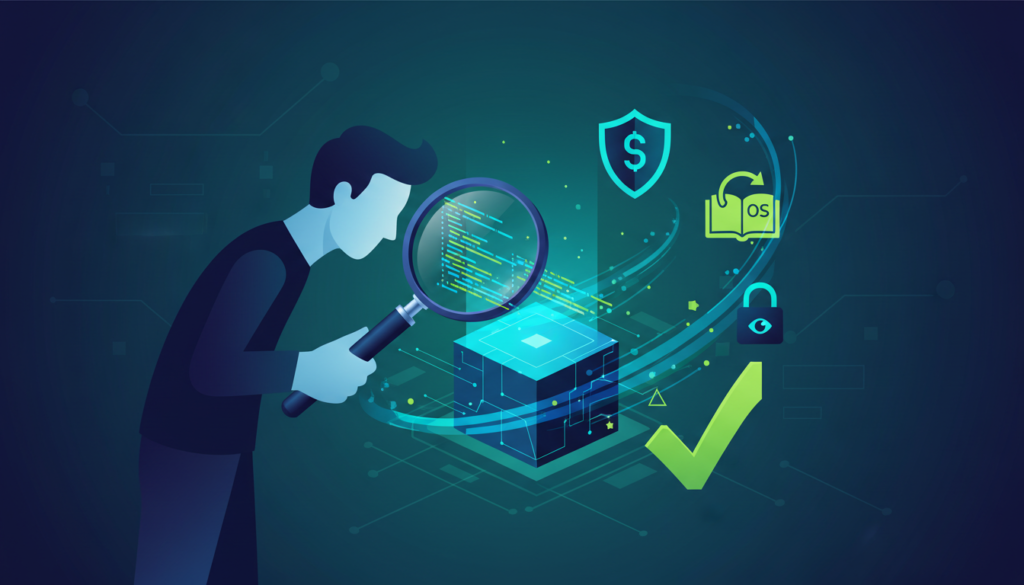
Saying “the AI wrote it” is not a governance model. A practical rule is to treat AI output as untrusted code until it has been verified. Whoever brings it into the codebase must understand it, test it and take technical responsibility for it.
Four checks before production
- Correctness: does it really meet the requirements, including edge cases and errors?
- Security and privacy: does it introduce vulnerabilities, secrets, unnecessary dependencies or problematic data processing?
- Provenance and licensing: have company policies, the tool’s terms and possible constraints on components been assessed?
- Maintainability: does the team understand the code, and will it be able to modify it without blindly depending on the model?
A simple ethical rule
Don’t just claim ownership of the output. Claim responsibility for it too.
AI can generate. The professional must understand, verify, modify and take responsibility for what they decide to use.
Perhaps this will be the real difference between AI-generated and AI-assisted. And perhaps in the near future saying “I made it with AI” will not diminish the value of a piece of work. It will simply describe how it was made.
The final question remains open: is a professional who makes intensive use of AI still the author of their own work, or are we building a new idea of authorship?


Leave a Reply