


On the Ionian coast of Calabria, in the 7th century BC, a Greek city made a decision we would now call good governance: rules cannot depend on the mood of whoever sits in judgment. The name tied to that choice is Zaleucus, remembered by tradition as the first lawgiver of the Greek West.
Epizephyrian Locris: the city and its time
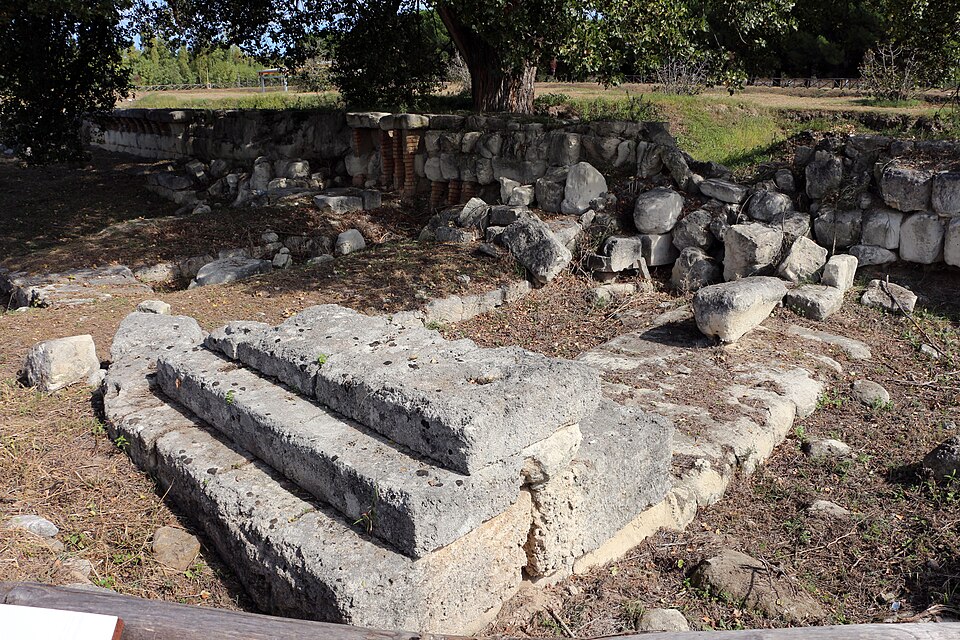
Epizephyrian Locris (Locri Epizefiri) was founded by Greeks from Locris on the Ionian coast of Calabria. It was an age of widespread colonisation: new cities, young communities and a fragile balance between aristocratic families and other citizens. According to an account attributed to Aristotle, the Locrians faced internal unrest, consulted an oracle and were told to give themselves laws.
Ancient chronographers place Zaleucus around 660 BC (Eusebius gives 662/661). Athens would put its laws in writing only later, with Draco and Solon, which is why Locris is remembered as one of the first cities to make written law a public matter.
What the sources credit Zaleucus with
According to Ephorus, as quoted by Strabo, judges had set penalties case by case before Zaleucus. He is credited with setting penalties in the law itself, making the community’s response more predictable even when judges took different views of the same offences. The same account credits him with simplifying the rules on contracts.
It is an idea we now associate with the rule of law: clear rules and limits on arbitrary decisions. Tradition built famous anecdotes around that idea, including the story that Zaleucus agreed to lose one of his own eyes when his son was sentenced. Demosthenes reports that only one law was said to have changed in Locris over more than two centuries, and that anyone proposing a new law had to appear with a noose around his neck.
A “first” to handle with care
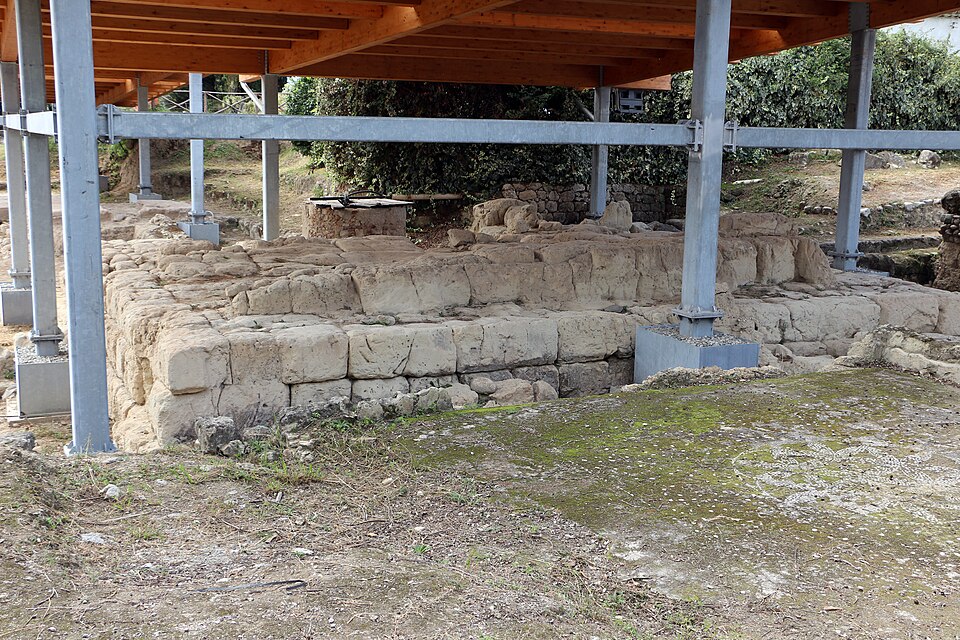
The title “first lawgiver of the Greek West” reflects an ancient tradition, not an undisputed fact. Cicero already noted that Timaeus denied Zaleucus ever existed, while Theophrastus and the Locrians themselves affirmed it. Modern scholars are divided too: some see a figure constructed later, perhaps in the 4th century BC, to lend prestige to a new political order; others defend a reliable historical core.
Even the biographies diverge. In the account attributed to Aristotle, Zaleucus was a shepherd who said he had received the laws in a dream from Athena. Diodorus describes him as a nobleman and even a pupil of Pythagoras, a detail incompatible with the traditional dating. A 2026 study by Ignazio D’Angelo in Mediterranea argues that Zaleucus was probably a historical figure, but questions his claim to primacy. On this reading, his innovation was not to give the Locrians their first written code, but to reorganise existing rules and set penalties in the laws themselves.
The question is what “first” means here. The chronology is uncertain, but the idea ancient tradition associates with Zaleucus still matters: the law should be knowable and applied consistently.
From ancient Locris to the classroom: what AI changes
If the goal is to help students understand where rules come from, artificial intelligence can make a useful contribution, provided they check what it tells them.
- Access to sources. AI can help translate ancient sources, explain them to learners and answer questions. Digital characters offer another way into the material. In Locri, the project Leggere nella città di Zaleuco (“Reading in the city of Zaleucus”) used a digital character, Zalex, and a map with geolocated points in AppLocri to bring residents and visitors closer to local history.
- The value lies in the method, not the answer. Zaleucus makes a good teaching case precisely because the sources disagree. Ask AI to compare Ephorus, the account attributed to Aristotle and Diodorus, then check the texts. A smooth summary that erases the debate misses the point.
- The risks. AI can invent plausible quotations or dates, smooth over disagreements and tempt students to skip the work of interpretation. Ask for sources, check them and keep the teacher or researcher as a guide.
- The ethical parallel. Tradition credits Zaleucus with trying to curb arbitrariness by making rules explicit and predictable. The parallel with AI is about clear rules, explainable decisions and accountability for those who propose changes. The noose in the Locrian story is a harsh metaphor for that accountability.
Used this way, AI does not replace study. It helps us practise the habits the story of Zaleucus calls for: checking who is speaking, what sources they rely on and what rules apply.
A note: the video that sparked this article
This article started from “Clementina a Locri” (in Italian), a short story published by AI Calabria, the project that collects and preserves Calabrian dialects, municipality by municipality. Clementina is the project’s digital ambassador: a character designed to bring local stories, like that of Zaleucus, to an audience that might not otherwise read an academic study. The project also aims to develop an AI system that can understand Calabrian dialects.
A few minutes of storytelling can spark curiosity about a 7th-century BC lawgiver. The video also shows why it is worth checking the sources. Some claims are more definite than the material I consulted: for instance, a recent study argues that written rules already existed in Locris before Zaleucus, and the source I found describes matrilineal descent rather than equality between men and women. That is not a reason to dismiss the video. It is a reason to treat it as a starting point and go back to the sources, with AI’s help if useful.
Sources
- Ignazio D’Angelo, La legislazione arcaica di Locri Epizefiri: la figura e le leggi di Zaleuco (in Italian), Mediterranea 11 (2026), pp. 339-357: journals.uco.es
- FAI, Fondo per l’Ambiente Italiano, page on Epizephyrian Locris (in Italian): fondoambiente.it
- Il Dispaccio, “Leggere nella città di Zaleuco” (in Italian): ildispaccio.it
- AI Calabria, “Clementina a Locri” (in Italian): ai.calabria.it
Cover photo: the Greco-Roman theatre of Epizephyrian Locris. Photo: Sandro Baldi, CC BY-SA 4.0, via Wikimedia Commons.




Leave a Reply